Facebook
 X
X
 Pinterest
 Copy Link
Selling Your Fort Erie Home? Don’t Make This Costly CRA Tax Mistake

Selling your home in Fort Erie? Even if your sale qualifies for the Principal Residence Exemption, you still need to report it to the CRA. Here’s what every homeowner should know.
One of the biggest misconceptions homeowners have is that selling their principal residence requires no tax reporting.
While it’s true that most Canadians won’t pay capital gains tax when selling a qualifying principal residence, that doesn’t mean the transaction can be ignored when tax season arrives.
In fact, failing to report the sale to the Canada Revenue Agency (CRA) could result in unnecessary penalties—even if no tax is owed.
For homeowners in Fort Erie and across the Niagara Region, understanding this rule is just as important as preparing your home for sale.
What Is the Principal Residence Exemption?
Canada’s Principal Residence Exemption is one of the most valuable tax benefits available to homeowners. If your property qualifies, any increase in value during the years you owned and lived in the home is generally exempt from capital gains tax.
For many Fort Erie homeowners, this exemption has protected significant appreciation over the years.
Whether you’ve owned a bungalow in Crescent Park, a waterfront property in Crystal Beach, a family home in Ridgeway or a rural property in Stevensville, the exemption may apply—but there is still paperwork to complete.
Why Reporting the Sale Matters
Since 2016, homeowners have been required to report the sale of their principal residence on their annual income tax return.
Many people mistakenly believe that because they don’t owe tax, they don’t need to tell the CRA about the sale.
Unfortunately, that’s not the case.
If the sale isn’t reported properly, the CRA may deny the exemption until the required forms are submitted and could assess penalties for late filing. According to the CRA guidelines summarized in this month’s newsletter, penalties can be the lesser of $8,000 or $100 for every complete month the designation is late.
Fortunately, many homeowners who voluntarily correct an honest mistake before the CRA contacts them may avoid penalties, but it’s always better to get it right the first time.
What If You Have a Basement Apartment?
This question comes up frequently in today’s market.
Many homeowners in Fort Erie have created basement apartments or secondary living spaces to help offset rising costs or accommodate family members.
The good news is that renting part of your home doesn’t automatically eliminate your Principal Residence Exemption.
According to the CRA, the exemption may still apply if:
- The rental use is secondary to your personal use of the home.
- No significant structural changes were made specifically for the rental.
- You haven’t claimed Capital Cost Allowance (CCA) on the rental portion.
However, every situation is different. If you’ve created a fully self-contained apartment or made substantial renovations, it’s important to seek advice from a qualified accountant or tax professional before selling.
Planning Ahead Can Save You Time and Money
Selling a home involves much more than accepting an offer.
Preparing your property, understanding market conditions, arranging legal representation and speaking with your accountant before closing are all important parts of the process.
By planning ahead, you can help ensure your transaction proceeds smoothly and avoid unexpected issues after closing.
As REALTORS®, we work closely with lawyers, mortgage professionals and accountants to help clients understand the entire process—not just the sale itself.
Local Perspective
Fort Erie continues to attract buyers from across Ontario thanks to its affordability, waterfront lifestyle and strong sense of community. As more homeowners decide to sell and make their next move, understanding both the real estate process and the tax implications becomes increasingly important.
Whether you’re moving within Fort Erie, relocating elsewhere in Niagara or planning your retirement, good advice before listing your home can make the entire experience much less stressful.
Did You Know?
Selling your principal residence is often one of the largest financial transactions you’ll ever complete. While your REALTOR® can guide you through the buying and selling process, tax advice should always come from a qualified accountant or tax professional who understands your individual circumstances.
 Download My FREE July 2026 Niagara Real Estate Newsletter
 Download My FREE July 2026 Niagara Real Estate Newsletter
Want to stay informed about the Fort Erie and Niagara real estate market?
My FREE July 2026 Niagara Real Estate Newsletter includes:
- Current mortgage rates
- Fort Erie and Niagara housing statistics
- Home buying and selling advice
- Tax tips for homeowners
- Monthly local market updates
 Download your FREE copy here:
July 2026 Niagara Real Estate Newsletter
https://drive.google.com/file/
If you’re thinking about selling your home in Fort Erie, Ridgeway, Crystal Beach, Stevensville, Crescent Park, Point Abino or anywhere in the Niagara Region, I’d be happy to provide a complimentary home evaluation and help you navigate today’s market with confidence.
The Biggest Mortgage Mistake Fort Erie Buyers Make Before They Start Looking

Buying a home is exciting, and it’s easy to jump straight into browsing listings or attending open houses. However, one of the biggest mistakes buyers make happens before they even step inside their first property—they skip getting pre-approved for a mortgage.
According to recent mortgage industry data, approximately 20% to 25% of active homebuyers begin their search without confirming how much they can actually borrow.
In today’s market, that can lead to disappointment, unnecessary stress, and missed opportunities.
Why a Pre-Approval Matters
A mortgage pre-approval is much more than a rough estimate of what you can afford. It gives you a realistic picture of your purchasing power based on your income, debts, credit history and current lending guidelines.
Without one, buyers often rely on online calculators or assumptions based solely on household income. Unfortunately, those estimates rarely account for existing financial commitments such as vehicle loans, credit cards, student loans or lines of credit.
Knowing your approved price range before you begin your search allows you to focus on homes that truly fit your budget.
Fort Erie Buyers Have More Choices
Today’s Fort Erie market is very different from the highly competitive market we experienced several years ago.
With more inventory available, buyers have greater opportunities to compare neighbourhoods, view multiple properties and take the time to make informed decisions. Whether you’re searching for a bungalow in Stevensville, a family home in Ridgeway, a cottage-style property in Crystal Beach or a waterfront home along the Niagara River, having financing in place allows you to act confidently when the right property becomes available.
A pre-approval also demonstrates to sellers that you’re a serious buyer, which can strengthen your position during negotiations.
Interest Rates Still Matter
Although mortgage rates have improved from some of the highs seen over the past two years, lenders continue to qualify borrowers using Canada’s mortgage stress test. As outlined in this month’s newsletter, buyers must qualify at the greater of 5.25% or their contract rate plus 2%.
Understanding these requirements before beginning your home search helps avoid surprises later in the process.
A Better Home Buying Experience
Buying a home should be exciting—not stressful.
Taking a few extra days to speak with a mortgage professional can make the entire process smoother. You’ll understand your budget, know your monthly payment range and have confidence when it’s time to submit an offer.
It also allows your REALTOR® to tailor your search to properties that meet both your lifestyle and financial goals.
Local Knowledge Makes a Difference
Every community in Fort Erie offers something different.
Some buyers are looking for walkability in Ridgeway, while others prefer larger rural properties in Black Creek or Stevensville. Others may be drawn to Crystal Beach for its waterfront lifestyle or Central Fort Erie for its proximity to shopping and the Peace Bridge.
Having your financing in place means you can focus on finding the right neighbourhood instead of wondering whether the home fits your budget.
Did You Know?
Many buyers assume a pre-approval guarantees financing. In reality, lenders will still verify the property, your employment and your financial situation before issuing a final mortgage approval. Keeping your finances stable during the buying process is just as important as obtaining the initial pre-approval.
Download My FREE July 2026 Niagara Real Estate Newsletter
Want to stay informed about the local housing market?
My FREE July 2026 Niagara Real Estate Newsletter includes:
- Current mortgage rates
- Fort Erie and Niagara market statistics
- Home buying and selling tips
- Tax updates for homeowners
- Local real estate trends
Download your FREE copy here:
July 2026 Niagara Real Estate Newsletter
https://drive.google.com/file/
If you’re thinking about buying a home in Fort Erie, Ridgeway, Crystal Beach, Stevensville, Crescent Park, Point Abino or anywhere in the Niagara Region, I’d be happy to connect you with trusted mortgage professionals and help you navigate today’s market with confidence.
How Much House Can You Really Afford in Fort Erie? The Answer May Surprise You

Think your income alone determines how much house you can buy? Learn what lenders really look at and how Fort Erie buyers can maximize their purchasing power.
One of the first questions almost every home buyer asks is, “How much house can I afford?”
Many people head straight to an online mortgage calculator, enter their income, and assume the number they receive is their budget. Unfortunately, it isn’t that simple.
In today’s lending environment, your income is only one piece of the puzzle. Canadian lenders evaluate your monthly financial obligations, debt levels, credit history, and mortgage stress test requirements before determining how much you can borrow. Understanding these rules before you begin house hunting can save time, reduce frustration, and help you shop with confidence.
It’s About More Than Your Salary
Many buyers are surprised to learn that two households earning the same annual income may qualify for very different mortgage amounts.
Why?
Because lenders look closely at your monthly financial commitments. Car payments, student loans, personal lines of credit and even credit card limits can all affect your purchasing power.
According to the latest mortgage guidance, your Total Debt Service (TDS) Ratio cannot exceed 44% of your gross monthly income. Housing costs and all monthly debt payments are included in this calculation.
This means that every financial decision you make before buying a home matters.
Small Debts Can Have a Big Impact
Many buyers focus on saving for a down payment but overlook the impact of existing debt.
For example, an ongoing vehicle payment or carrying a high credit card balance may reduce the amount you qualify to borrow. Even unused credit can influence your application because lenders evaluate your overall financial profile.
This is one reason why meeting with a mortgage professional before starting your home search is so valuable. They can identify ways to improve your borrowing capacity before you begin making offers.
Why This Matters in Fort Erie
Fort Erie remains one of the more affordable communities in the Niagara Region, making it attractive to first-time buyers, families, retirees and those relocating from larger urban centres.
Whether you’re looking in Ridgeway, Crystal Beach, Stevensville, Crescent Park or Central Fort Erie, knowing your true purchasing power allows you to focus on homes that fit comfortably within your budget.
It also strengthens your position when the right property becomes available.
Rather than scrambling to arrange financing after finding a home you love, you’ll already know what you can comfortably afford.
Start With a Plan
Buying a home is one of the largest financial decisions most people will ever make.
Before you begin attending open houses or scheduling private showings, take the time to speak with a licensed mortgage professional. A proper pre-approval provides a clearer understanding of your budget and helps ensure your home search starts on the right foot.
The more prepared you are, the more confident you’ll feel throughout the buying process.
Did You Know?
The July newsletter notes that 20% to 25% of homebuyers skip obtaining a mortgage pre-approval before starting their search. Taking this important first step can help avoid disappointment and make the buying process much smoother.
Download My FREE July 2026 Niagara Real Estate Newsletter
Want more local real estate insights?
My FREE July 2026 Niagara Real Estate Newsletter includes:
- Current mortgage rates
- Fort Erie and Niagara housing statistics
- Home buying and selling advice
- Tax tips for homeowners
- Monthly local market updates
Download your free copy here:
July 2026 Niagara Real Estate Newsletter
https://drive.google.com/file/
If you’re considering buying or selling in Fort Erie, Ridgeway, Crystal Beach, Stevensville, Crescent Park, Point Abino or anywhere in the Niagara Region, I’d be happy to help you understand today’s market and guide you through the process with confidence.
🏡 Friday Wrap-Up | Fort Erie & Port Colborne
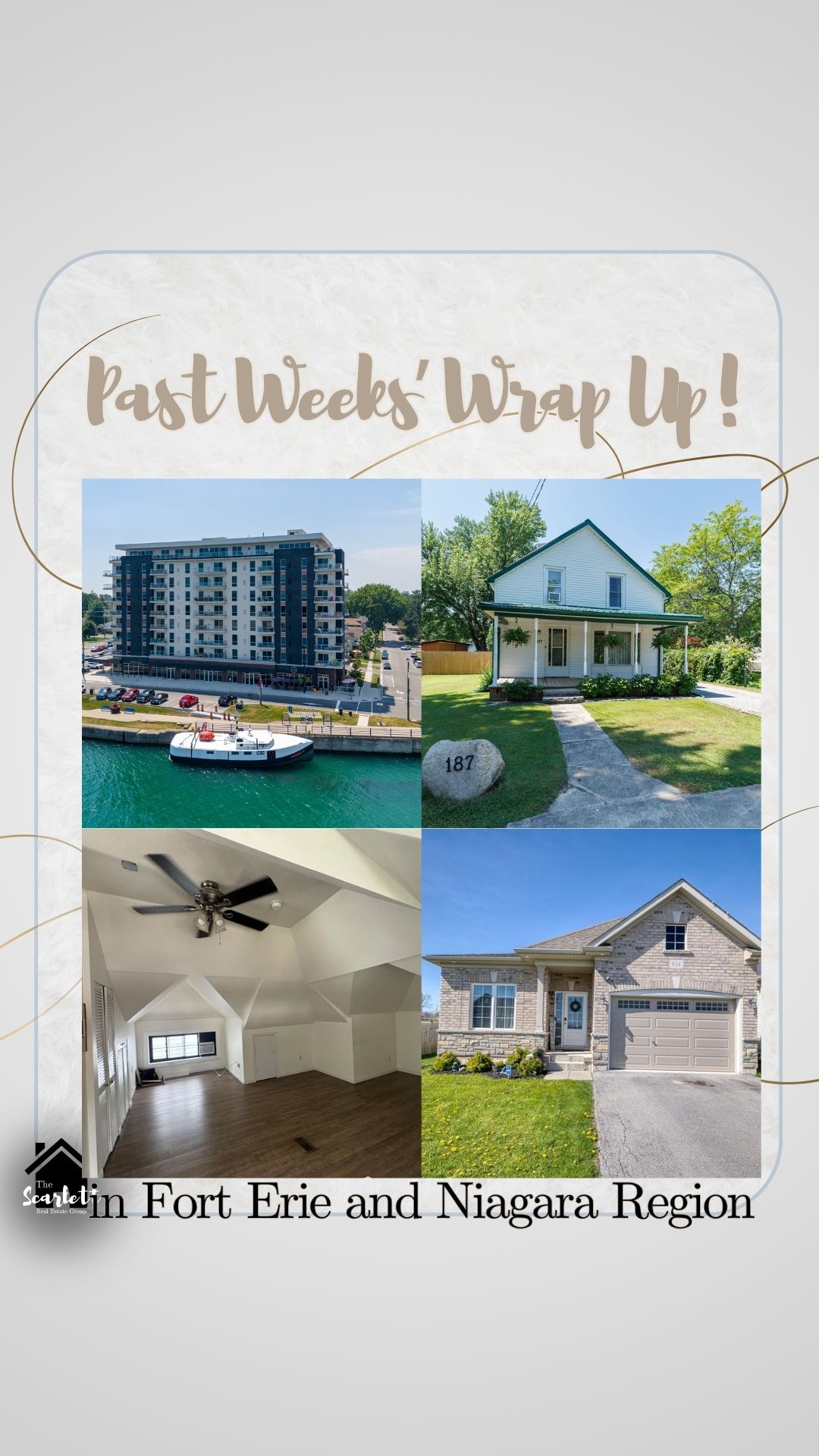
🏡 Friday Wrap-Up | Fort Erie & Port Colborne
Another exciting week with new listings, a coming soon, and another successful closing!
✨ NEW LISTINGS
📍118 West Street #704, Port Colborne
Waterfront condo living with breathtaking views of the Welland Canal and Lake Erie.
🌅 2 Bedrooms | 2 Bathrooms
🌊 Waterfront balcony with panoramic canal and lake views
🔥 Electric fireplace
🍽️ Open-concept layout with upgraded finishes
🏋️ Fitness room, party room & elevator building
🚲 Exclusive locker & bike storage
🚗 Dedicated parking space
🚪 Open House
🗓️ Sunday, July 12
⏰ 12:00 PM – 2:00 PM
Come experience the views, the lifestyle, and everything this waterfront condo has to offer.
📍344 Ridge Road N #3, Ridgeway – Residential Lease
Executive bachelor apartment in the heart of Ridgeway.
✨ Quartz countertops
🧺 In-suite laundry
❄️ Central air
🛗 Elevator building
🛍️ Walk to restaurants, boutiques & grocery stores
🚗 Parking included
🏡 COMING SOON
📍187 South Mill Street, Ridgeway
A charming character home coming to the market soon.
🛏️ 3 Bedrooms
📐 Over 1,700 sq. ft.
🚗 Detached 3-car garage
🚙 Parking for up to 9 vehicles
🌳 Large 66′ x 165′ lot
🏠 Located in one of Ridgeway’s most desirable neighbourhoods
👀 Stay tuned for more details!
🔑 CLOSED
📍914 Burwell Street, Fort Erie
Congratulations to our sellers and the new homeowners! Thank you for trusting us to help guide another successful transaction.
Every week brings new opportunities across Fort Erie, Ridgeway, and Port Colborne. Whether you’re buying, selling, investing, or looking for your next rental, I’d be happy to help you navigate today’s market.
📩 Reach out anytime if you’re thinking about making your next move.
#FortErieRealEstate #NiagaraRealEstate #PortColborneRealEstate #RidgewayOntario #WaterfrontCondo #OpenHouse #JustListed #ComingSoon #FortErieHomes #NiagaraHomes #OntarioRealEstate #HouseHunting #InvestmentProperty #Century21Canada #PortColborne
Fort Erie Home Prices Are Down—So Why Are More Homes Selling?

Fort Erie home sales increased 8.7% over the past year, even as benchmark prices declined. Learn what this means for buyers, sellers, and the local real estate market.
Over the past several months, I’ve had more than one client ask the same question:
“If home prices are down, why do I keep hearing that homes are selling?”
It’s a fair question—and one that highlights why looking beyond the headlines is so important.
The latest 12-month housing statistics show that Fort Erie recorded 609 home sales, an 8.7% increase compared to the previous 12 months. At the same time, the benchmark home price declined to $492,200, representing a 9.84% decrease year over year.
At first glance, those numbers seem to contradict each other. In reality, they tell the story of a market that is becoming more balanced.
Fort Erie Continues to Attract Buyers
While some markets across Ontario have seen sales slow, Fort Erie has continued to attract buyers looking for affordability and lifestyle.
Our community offers something that’s becoming increasingly difficult to find elsewhere in Southern Ontario: access to the waterfront, established neighbourhoods, and a range of housing options at prices that remain competitive within the Niagara Region.
Whether it’s a young family purchasing their first home in Stevensville, retirees downsizing to Ridgeway, or buyers relocating from the Greater Toronto Area to Crystal Beach, Fort Erie continues to appeal to a wide range of purchasers.
June 2026 Market Snapshot
| Market | 12-Month Sales | Sales Change | HPI Benchmark Price |
|---|---|---|---|
| Fort Erie | 609 | +8.7% | $492,200 |
| Niagara Region | 6,153 | -1.1% | $575,300 |
Source: Niagara Association of REALTORS® MLS® Statistics.
Why Have Prices Declined?
A decline in benchmark price doesn’t necessarily mean the market is struggling.
Today’s buyers are approaching homeownership differently than they were just a few years ago. Higher borrowing costs mean affordability has become a larger part of the conversation. Buyers are taking more time, comparing more properties, and negotiating with greater confidence.
At the same time, inventory has improved in many price ranges. More listings mean buyers have more choice, which helps keep prices grounded in current market conditions.
This creates a healthier environment than the highly competitive market we experienced during 2021 and early 2022, when limited inventory often led to multiple offers and rapidly increasing prices.
What This Means for Sellers
For homeowners considering selling, the market remains active—but strategy matters.
Pricing a home based on last year’s market rather than today’s conditions can lead to longer days on market. Buyers are well informed, and many have spent months watching new listings before making an offer.
Homes that are professionally marketed, well presented, and priced according to current market conditions continue to attract attention.
The increase in sales tells us one important thing: buyers haven’t disappeared. They’re simply making more deliberate decisions.
What This Means for Buyers
For buyers, today’s market offers opportunities that were difficult to find only a few years ago.
There is generally more time to view properties, complete inspections, and compare neighbourhoods before making a decision. While financing remains an important consideration, buyers often have greater flexibility during negotiations than they did during the peak of the market.
For many people moving to Fort Erie from larger urban centres, today’s prices continue to represent good value compared to neighbouring markets.
Looking Ahead
Every real estate market moves through cycles, and Fort Erie is no exception.
The combination of increasing sales activity and moderated pricing suggests that buyers continue to see long-term value in our community. As interest rates stabilize and confidence improves, Fort Erie remains well positioned thanks to its waterfront lifestyle, growing amenities, and convenient location within the Niagara Region.
Rather than focusing on national headlines, it’s important to understand what’s happening in your own neighbourhood. Market conditions in Crystal Beach may differ from Ridgeway or Central Fort Erie, and local knowledge continues to be one of the most valuable tools for both buyers and sellers.
Download My FREE July 2026 Niagara Real Estate Newsletter
Want to stay up to date on the Fort Erie and Niagara real estate market?
My FREE July 2026 Niagara Real Estate Newsletter includes:
- Current mortgage rates
- Fort Erie and Niagara housing statistics
- Home buying and selling tips
- Tax information for homeowners
- Local market trends
Download your free copy here:
July 2026 Niagara Real Estate Newsletter
https://drive.google.com/file/
If you’re thinking about buying or selling in Fort Erie, Ridgeway, Crystal Beach, Stevensville, or anywhere in the Niagara Region, I’d be happy to provide a complimentary market analysis tailored to your neighbourhood.
Every summer, life quietly moves outdoors… and somehow, life feels a little lighter.

Every summer, life quietly moves outdoors… and somehow, life feels a little lighter.
I was thinking about that this morning while walking with Blue.
In Canada, we don’t just experience the seasons…
we live by them.
Winter asks more of us.
More layers.
More planning.
More effort just to get out the door.
But then summer arrives.
The gardens begin to fill in.
The patios come alive.
The evenings stretch a little longer.
And suddenly, simple things become easy again.
It reminded me of when my boys were little.
Getting everyone ready to leave the house in the winter felt like an event.
Now it’s as simple as putting on a pair of shoes and heading outside.
Maybe that’s why I love this season so much.
Not because life slows down…
It doesn’t.
But because it feels a little less complicated.
This afternoon, after a few hours of work, Alex and I are heading to the boat.
The water has always been my place to reset.
And today, I’m simply grateful.
Grateful for longer days.
Grateful for warm mornings.
Grateful for another summer to enjoy the little things that so easily become the big things.
💬 What’s your favourite part of summer that makes life feel just a little easier?
#GodMoment #FortErie #NiagaraLife #SummerInNiagara #LifeOnTheWater #FortErieLiving #CrystalBeachOntario #RootedLiving #SimpleJoy #SlowLiving #GratitudeJourney #MorningWalks #WomenOver50 #LifeByTheWater #SummerReflections #RealEstateWithHeart #NiagaraRealEstate #BoatLife #LifeWellLived #BlueTheDog
Niagara Real Estate Market Update: What Today’s Numbers Mean for Buyers and Sellers
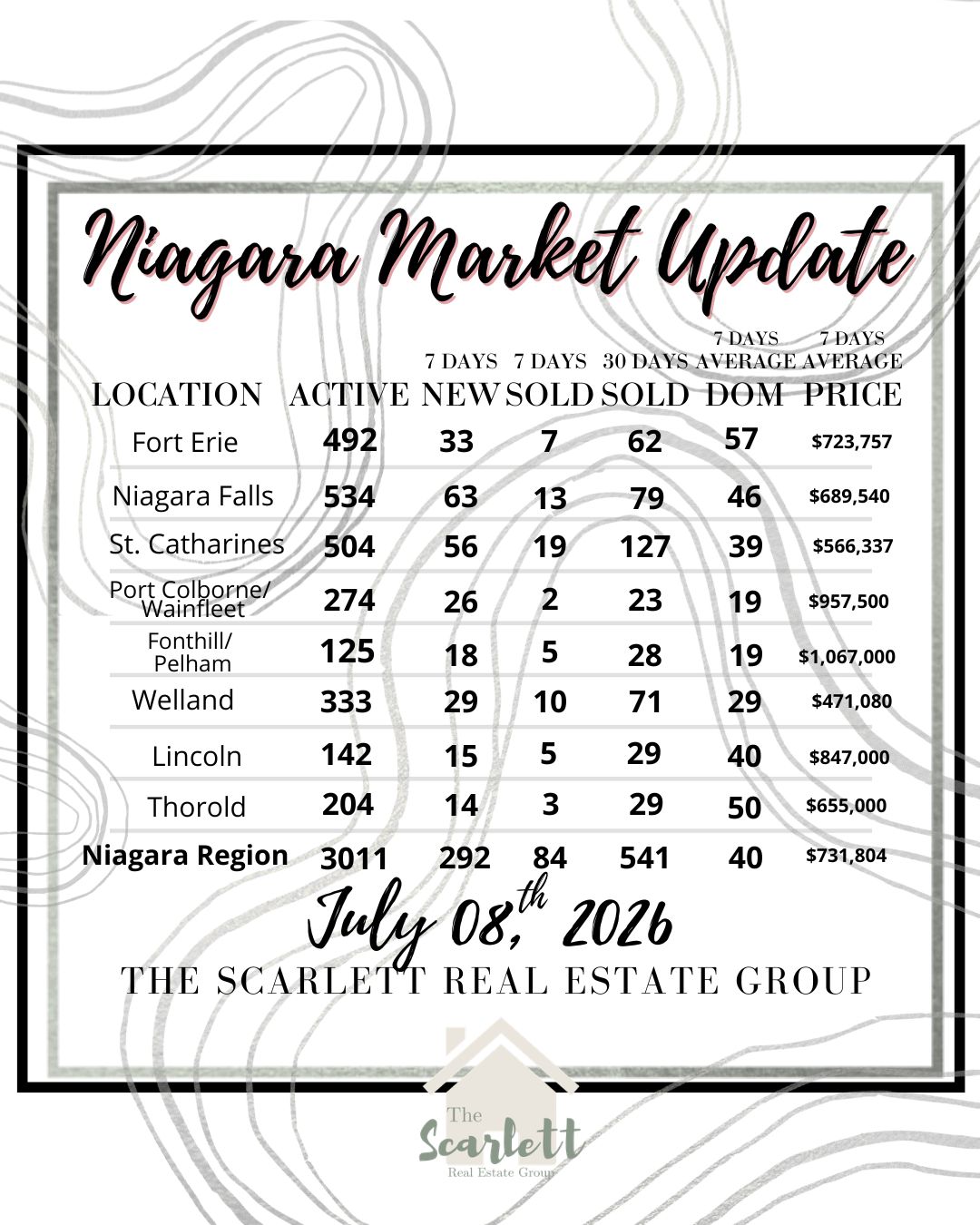
Niagara Real Estate Market Update: What Today’s Numbers Mean for Buyers and Sellers
Each week I review the latest market statistics for both the Niagara Region and Fort Erie. While the numbers provide a snapshot of current activity, they also help identify trends that can be useful whether you’re buying, selling, or simply watching the market.
Niagara Region Market
Looking at the Niagara Region as a whole, inventory continues to be one of the defining characteristics of today’s market.
Current Statistics
- Active Listings: 3,011
- New Listings This Week: 292
- Sales This Week: 84
- Sales (Last 30 Days): 541
- Average Days on Market: 40
- Average Sale Price (Last 7 Days): $731,804
The number of homes available gives buyers plenty of choice across the region. Whether you’re looking for a first home, an investment property, or a move-up home, there is a wider selection than we’ve seen in several years.
At the same time, sales have remained relatively consistent over the past month. Buyers are entering the market, but they are taking a much more measured approach than they did during the peak of the market. They’re comparing homes, negotiating price and conditions, and taking the time to make informed decisions.
Fort Erie Market
Fort Erie continues to reflect many of the same trends, although homes here are generally taking longer to sell than the regional average.
Current Statistics
- Active Listings: 492
- New Listings This Week: 33
- Sales This Week: 7
- Sales (Last 30 Days): 62
- Average Days on Market: 57
- Average Sale Price (Last 7 Days): $723,757
Although inventory remains elevated, what I find encouraging is that homes continue to sell every single week. The market has not stopped—it has simply become more balanced.
Buyers today are viewing several properties before making a decision. They’re comparing locations, finishes, lot sizes, and overall value. They’re also negotiating more frequently, whether that’s on price, conditions, or closing dates.
This is a very different environment from a few years ago when many homes received multiple offers within days of being listed.
What This Means for Sellers
For sellers, accurate pricing is one of the most important decisions you’ll make.
The homes generating the strongest interest are typically those that enter the market priced in line with current market value. Buyers today have access to hundreds of comparable listings, making it much easier for them to recognize when a property is priced appropriately.
Homes that begin too high often remain on the market longer, require price reductions, and can ultimately sell for less than they might have if they had been positioned correctly from the start.
Looking Ahead
Overall, the Niagara and Fort Erie markets remain active, but they’re being driven by informed buyers rather than urgency.
For buyers, today’s market offers choice, negotiating power, and time to make thoughtful decisions.
For sellers, success depends on preparation, presentation, and strategic pricing.
As always, I’ll continue sharing these weekly updates so you can follow how our local market is evolving and make informed real estate decisions based on current data rather than headlines.
Fort Erie Real Estate Market Update: June
Learn what the latest Fort Erie housing statistics mean for buyers and sellers in June 2026, including home prices, sales activity, and local market trends.
The latest housing statistics show Fort Erie continues to attract buyers despite a more balanced real estate market. Over the past 12 months, 609 homes sold, up 8.7% from the previous year. At the same time, the benchmark home price declined to $492,200, reflecting broader affordability challenges across Niagara.
Fort Erie Market Snapshot
| Statistic | June 2026 |
|---|---|
| Homes Sold | 609 |
| Sales Change | +8.7% |
| Benchmark Price | $492,200 |
| Price Change | -9.84% |
Source: Niagara Association of REALTORS®.
What the Numbers Mean
An increase in home sales tells us buyers are still active in Fort Erie. The decline in benchmark pricing doesn’t necessarily signal a weak market. Instead, it reflects today’s borrowing environment, where higher mortgage costs and more available listings are encouraging buyers to negotiate and focus on affordability.
Fort Erie continues to stand out because it offers good value compared to many neighbouring communities while providing access to Lake Erie, the Niagara River, Ridgeway, Crystal Beach, and the Peace Bridge.
What Buyers and Sellers Should Know
For buyers, today’s market offers more choice and less competition than a few years ago. For sellers, realistic pricing and strong marketing remain essential. Homes that are well presented and priced according to current market conditions continue to attract interest.
If you’re considering buying or selling in Fort Erie, local market knowledge is more valuable than national headlines. Every neighbourhood behaves differently, and understanding those trends can help you make a more informed decision.
Free July 2026 Niagara Real Estate Newsletter
Stay informed with monthly updates on Fort Erie and Niagara real estate, mortgage trends, housing statistics, and practical tips for buyers and sellers.
Download your free copy here:
https://drive.google.com/file/
If you’re thinking about buying or selling in Fort Erie or anywhere in the Niagara Region, I’d be happy to provide a complimentary market analysis and answer your real estate questions.
==============================

Article 2
Fort Erie Home Prices Are Down—So Why Are More Homes Selling?
Meta Description: Fort Erie home sales increased 8.7% over the past year, even as benchmark prices declined. Learn what this means for buyers, sellers, and the local real estate market.
Estimated Reading Time: 4 minutes
Over the past several months, I’ve had more than one client ask the same question:
“If home prices are down, why do I keep hearing that homes are selling?”
It’s a fair question—and one that highlights why looking beyond the headlines is so important.
The latest 12-month housing statistics show that Fort Erie recorded 609 home sales, an 8.7% increase compared to the previous 12 months. At the same time, the benchmark home price declined to $492,200, representing a 9.84% decrease year over year.
At first glance, those numbers seem to contradict each other. In reality, they tell the story of a market that is becoming more balanced.
Fort Erie Continues to Attract Buyers
While some markets across Ontario have seen sales slow, Fort Erie has continued to attract buyers looking for affordability and lifestyle.
Our community offers something that’s becoming increasingly difficult to find elsewhere in Southern Ontario: access to the waterfront, established neighbourhoods, and a range of housing options at prices that remain competitive within the Niagara Region.
Whether it’s a young family purchasing their first home in Stevensville, retirees downsizing to Ridgeway, or buyers relocating from the Greater Toronto Area to Crystal Beach, Fort Erie continues to appeal to a wide range of purchasers.
June 2026 Market Snapshot
| Market | 12-Month Sales | Sales Change | HPI Benchmark Price |
|---|---|---|---|
| Fort Erie | 609 | +8.7% | $492,200 |
| Niagara Region | 6,153 | -1.1% | $575,300 |
Source: Niagara Association of REALTORS® MLS® Statistics.
Why Have Prices Declined?
A decline in benchmark price doesn’t necessarily mean the market is struggling.
Today’s buyers are approaching homeownership differently than they were just a few years ago. Higher borrowing costs mean affordability has become a larger part of the conversation. Buyers are taking more time, comparing more properties, and negotiating with greater confidence.
At the same time, inventory has improved in many price ranges. More listings mean buyers have more choice, which helps keep prices grounded in current market conditions.
This creates a healthier environment than the highly competitive market we experienced during 2021 and early 2022, when limited inventory often led to multiple offers and rapidly increasing prices.
What This Means for Sellers
For homeowners considering selling, the market remains active—but strategy matters.
Pricing a home based on last year’s market rather than today’s conditions can lead to longer days on market. Buyers are well informed, and many have spent months watching new listings before making an offer.
Homes that are professionally marketed, well presented, and priced according to current market conditions continue to attract attention.
The increase in sales tells us one important thing: buyers haven’t disappeared. They’re simply making more deliberate decisions.
What This Means for Buyers
For buyers, today’s market offers opportunities that were difficult to find only a few years ago.
There is generally more time to view properties, complete inspections, and compare neighbourhoods before making a decision. While financing remains an important consideration, buyers often have greater flexibility during negotiations than they did during the peak of the market.
For many people moving to Fort Erie from larger urban centres, today’s prices continue to represent good value compared to neighbouring markets.
Looking Ahead
Every real estate market moves through cycles, and Fort Erie is no exception.
The combination of increasing sales activity and moderated pricing suggests that buyers continue to see long-term value in our community. As interest rates stabilize and confidence improves, Fort Erie remains well positioned thanks to its waterfront lifestyle, growing amenities, and convenient location within the Niagara Region.
Rather than focusing on national headlines, it’s important to understand what’s happening in your own neighbourhood. Market conditions in Crystal Beach may differ from Ridgeway or Central Fort Erie, and local knowledge continues to be one of the most valuable tools for both buyers and sellers.
Download My FREE July 2026 Niagara Real Estate Newsletter
Want to stay up to date on the Fort Erie and Niagara real estate market?
My FREE July 2026 Niagara Real Estate Newsletter includes:
- Current mortgage rates
- Fort Erie and Niagara housing statistics
- Home buying and selling tips
- Tax information for homeowners
- Local market trends
Download your free copy here:
July 2026 Niagara Real Estate Newsletter
https://drive.google.com/file/
If you’re thinking about buying or selling in Fort Erie, Ridgeway, Crystal Beach, Stevensville, or anywhere in the Niagara Region, I’d be happy to provide a complimentary market analysis tailored to your neighbourhood.
I remember looking at them thinking, “I’m so late this year!”

This was filmed in early June when I was finally getting around to planting my window boxes. I remember looking at them thinking, “I’m so late this year!”
Thankfully, a little water and a little patience go a long way.
One of my favourite things about this time of year is watching everything come to life. The gardens, the planters, the hanging baskets… they all start small, and before you know it, they’re overflowing with colour.
I’ll share an update soon because they’ve come a long way since this video.
Sometimes it’s nice to be reminded that beautiful things don’t happen overnight—they grow a little bit every day.
🌸🌿
#FortErie #NiagaraRegion #GardeningSeason #WindowBoxes #GardenLife #SummerGardens #LifeInNiagara #HomeAndGarden #BackyardLiving #OntarioGardening #FlowerLover #SummerAtHome #CuratingLifeBalance #SlowLiving #BloomWhereYouArePlanted
Some homes take time…


Some homes take time…
and that’s part of the process.
In a slower market, consistency matters. Showing up. Staying focused. Adjusting when needed.
Stephanie trusted the process, and together we stayed the course — right through to a strong result.
Thank you for your trust and patience every step of the way. 🤍🏡
#forterie #niagararealestate #scarlettrealestategroup #century21niagara #homesellers #marketconditions #realestateservice #clientreview #staythecourse #localexpert #trustedrealtor #sold #testimonial #gratitude #realestatelife